Showing posts with label Rumphi. Show all posts

26 May 2007

Tail Between Our Legs

It's been such a long time since I've put together a post, I've forgotten where we left off, maybe someone will refresh my memory ...

Oh yes, that's right, we're still in Rumphi, we're still hours from Lilongwe, it's now Saturday and we need to get back for our Sunday flights. We're fine, we have the entire day ... what was that? Shoot, I forgot we don't have a vehicle.

So here we are, still in Rumphi, merely a couple hundred miles away from Lilongwe, we got up super early to start our day, we'll be fine. First leg, Rumphi to Mzuzu.

If anyone has been in a developing country, you've probably seen them, the small mini-vans that whiz around towns, packed to the gills (I had to look up the origin of this expression, amazingly, not in Wikipedia), yes, I know you've seen them before, I have too. We've all seen them but how many of us have actually been in one? Wow, I'm impressed. I've never been in one myself, not until this day.

Let me back up. The night before, we were discussing our options with how to return to Lilongwe. Since another rental was not an option, it was down to public transportation, either bus or even possibly renting out and entire mini-bus for our trip. What we decided to start was we had to at least get to Mzuzu, a slightly large city that has a bus depot and then figure out our options from there.

So here we are, with our bags bulging out the back, we pile into the bus, the 5 of us and 15 others for a total of 20. We were like clowns in a VW Bug. And I thought our prior sleeping arrangement were close quarters, at least it was only for an hour. Here's a look inside:


That was taken from the last row, me and Dan are sitting in the opposite facing seats, like the seats in the first couple rows of a Southwest flight, except much tighter.

We arrive in Mzuzu and are delighted to find that a bus to Lilongwe was still at the depot. The night before, we thought the bus would depart too early but we discover that much like traffic signals, bus schedules are suggestive too. The buses depart only when full and fortunately, it wasn't full but close enough that we didn't have to wait too long. About an hour later, we're on our way. Here we are in our seats, in the very rear of the bus:


Did I mention the engine was beneath our seats? It was rather warm but we did very well, just happy to be heading in the right direction. We met some people on the bus, played some cards and made fun of Ryan.

RS: Playing cards without a table:


7 hours later, we finally made it back to Lilongwe sans Hilux.

We did have to say good-bye to Moya. I don't know where we would've been if it wasn't for Moya.

Thank you Moya!

Moya and Daniel

25 May 2007

The Midas Touch

So Mellissa and I drove back to Matuhnka to pick up a tow bar. Mellissa and the two Dutchmen stayed behind while the training mechanic and I drove back to pick up Dan and the Hilux in an old, open-aired, Landrover jeep. I sat on the bench in the back holding the tow bar.

The tow bar is a hollow iron tube about eight feet in length that connects on one end to a hitch and has on the other end an eye through which you can string rope to connect to the car you want to tow.

I really enjoyed the ride down the hill. The sun had cast a spectacular scene across the valley we were driving through, the temperature was perfect, and I was taking it all in in the open air. It doesn't get much better than that.

This gives you a sense of the valley scene:


When we got down to the mechanic's yard, we started to connect the tow bar to the Hilux. The mechanic connected the bar to the hitch on the back of the jeep, and then used rope to tie the bar to the underside of the HIlux. He was a little too close to the Hilux, so he got in the jeep to move forward a bit.

The problem was, the jeep would not start.

Great. Well, at least we're in the right spot to break down.

The mechanic toyed around with the battery connection but to no avail. We disconnected the tow bar so we could push start the thing. We were on an incline so we tried rolling the car backwards to get it going in reverse.

A heave and a ho and a . . . that didn't work. We pushed it up the hill to try it again. No luck.

It had started raining and I started feeling a bit desperate. Would nothing work on this trip? We're on a dirt lot so if we don't get the Landrover up and running soon we're not going to be able to tow the Hilux out of the mud.

Okay, so we'll try push starting the jeep on more level ground; we'll push it side to side. A number of guys who were hanging around the side of the road came over to help.

We pushed it one way. Nothing. We pushed it back. Nothing. We tried the downhill trick again but this time facing forward. Nothing. We pushed the jeep back up the hill to try again. Finally, on the sixth attempt, we got the Landrover to start.

Okay, now let's see if we can tow the Hilux.

We reconnected the tow bar to the jeep and tied it to the Hilux. Dan got in the HIlux to steer and off we . . .

Nope. The rope broke.

Dan got out to tell the driver that this wasn't going to work. Apparently, they tried the same thing the night before when towing the Hilux back up to town and the rope broke every time. The mechanic said, don't worry, we'll double tie it this time.

So they double tied it and sure enough, we got the Hilux moving.

What a relief. I was really looking forward to getting back so that we all could hang out and enjoy a meal together for the first time since leaving Nyika a day and a half ago. We drove the Hilux to the gate of Matuhnka, turned right towards the gate, and, without warning, we were cut off by a an open bed truck passing us on the right. (Remember, we're driving on the left hand side of the road, so the right turn is like a left turn - it's as if you were making a left hand turn and someone from behind passed you on the left just as you were turning).

Thankfully the mechanic slammed on the brakes in time to avoid a collision. The Hilux couldn't do the same, however; its momentum carried it towards the jeep. The Hilux would have slammed into the jeep had the tow bar not jerked it back in place. While this was good for the cars, it was bad for the tow bar. It bent backwards, creating a major crease near the end of the bar. We were extremely lucky that the bar didn't rip apart during the rest of our ascent to the guest house.

I felt so bad. The NGO folks had done us an enormous favor by helping us sort out our car situation and allowing us to store the Hilux on their grounds. They lent us their tow bar to bring the Hilux back up the hill, and what did we do? We broke the damn thing.

Granted, it wasn't entirely our fault, but everything we touched seemed to turn to . . . well, something other than gold.


http://www.whatihaveread.net/i/0022.jpg

Tale of Two Cities

"It was the best of times, it was the worst of times, it was the age of wisdom, it was the age of foolishness, it was the epoch of belief, it was the epoch of incredulity, it was an afternoon to drink beers, play cards, and read magazines in the comfort of a shaded, guest home oasis, it was an afternoon to haggle with a jumble of amateur and professional mechanics in an exposed dirt yard over a disassembled mess of automobile that no one could manage to start."

I'm not sure who wrote that, but I've always liked it.

It was now about 3:00 p.m. and Dan still wasn't back. It was clear the car was irremediably broken and that we'd be spending another night in Rumphi. It was also clear that we needed to change course because we had to get back to Lilongwe to catch our flights the following morning.

So we struck up a conversation with one of the directors of the NGO to see if we could borrow her cell to call Dan. She told us that it wasn't safe to have our car worked on by mechanics in town because they don't have the diagnostic equipment to recognize the problem, they don't have the parts necessary to fix a problem if they do recognize it, and they aren't particularly well trained to fix the problem in the first place. She opined that we were likely to find our car in worse shape than when we left it. For that reason, she said, they don't trust their own vehicles with the mechanics down the hill. They have all of their vehicles serviced on the premises.

Part of the NGO's occupational training program included a mechanic's yard. As luck would have it, the Dutch mechanic they use to train their students was in town for the month. She suggested that maybe he could go down to town with us and assess the situation with our car.

About fifteen minutes later, the other director of the NGO, the Dutch mechanic, and a local student offered to drive us down to check out what was going on with the car. Mellissa and I jumped in the car with them while Jon and Katy stayed behind.


When we reached the mechanic's yard where our car was sitting in shambles, we spotted Dan with his face in his hands sitting by the side of the road. This had not been a good day for him.

We walked up to the car to witness quite a scene. It wasn't just the two mechanics we saw the night before working on the vehicle. There were probably eight to ten guys huddled around the car pointing and arguing and taking things apart. I believe that three were actually affiliated with that mechanics yard and the others, as far as I could tell, were passersby who had taken an interest in our vehicle and stuck around to offer their own opinion on the matter.

We all got out and walked up to the front of the car to talk to the mechanics. The front bumper was completely removed, the radiator was on the ground as were a few other engine components that I didn't recognize.

The guys from the NGO had a look at the engine and walked around the car to talk to everyone there. I walked around to the passenger's side of the car (left-hand side in this case) where a mechanic (I think) was sitting in the front seat taking apart some electrical device.

The Dutch mechanic turned to me and said, "look at what this guy is doing right here. What he's doing there has nothing to do with what's mechanically wrong with the engine. I don't know what he's doing. Maybe he's swapping out pieces from your car for resale. I don't know."

My stomach dropped. I started to view our situation in an entirely different light. We had trusted these mechanics to help us out. We believed that Moya would find us someone to be honest and fair with us. Now, I felt like we were being had for the clumsy, rich, and stupid Americans that we were in that moment.


So I walked up to Dan and told him that we needed to get the hell out of there. We had to call the owner of the car and tell him there was nothing we could do to get the thing running and that we were going to have to leave it in Rumphi for him to retrieve. The folks at the NGO were kind enough to let us leave the car at their facility, so we could tell the owner he had his choice of leaving the car with the mechanics or leaving it at the NGO. Dan agreed. The poor guy was so worn down he probably would have agreed to anything.

Dan called the owner and made the arrangements. Mellissa and I were to return to the NGO to pick up a towing bar to bring the Hilux up the hill. Dan would stay behind, settle up with the mechanics, and then walk over to the minibus depot to inquire with a minibus driver about the cost of renting out an entire minibus to take us all the way back to Lilongwe the next day.

Meanwhile, back at the ranch . . . .


JP: Katy and Jon are enjoying tea and afternoon snacks over a game of gin rummy.

Oh Dearest Rumphi, Please Forgive Us, We Had You All Wrong

Dearest Rumphi,

Please forgive us, we had you all wrong. Maybe we caught you on a bad day, but we were still too quick to make judgment. There is more to you than hospitals, no running water and food and full hotels. But after meeting Moya, we should've known you had much more too offer.
Thank you for not holding it against us. Please accept our sincerest apologies.

Cheese on Toast, Lemon Squeezy, Science, Katy and Jon

----------------

It's amazing how quickly things can change, especially while traveling. After one of the longest and most interesting days of our lives, we awake to find ourselves safe, clean (hot showers) and surprisingly well-rested (considering our sleeping arrangement).

Despite the difficulty with finding lodging, we end up at what has to be the best place to stay in Rumphi, Mutunkha Centre for Orphan Care, an orphanage and vocational school for boys that has a guest house; it's an NGO run by a very patient and understanding Dutch couple. Our Rumphi oasis.

Minus Dan, we begin the day with a tasty English breakfast and our first meal in 24 hours:

Now with the sun up, we discover that we're near the top of this hill overlooking a little valley that could be mistaken for California wine country, tranquil and beautiful, the only thing missing were vineyards. Not a bad way to start our day, good spirits once again, but there were still a number of unknowns for the rest of the day:
  1. Where's Danny? How's he doing?
  2. Will the Hilux get fixed?
  3. Another night at Mutunhka?
  4. Will we make it to Nhkata Bay?
  5. Will we make it to Lilongwe?
But for now, we'll not think about it, we'll just enjoy our morning and be glad we're here
and not where we were last night ...

24 May 2007

Rumphi, Malawi: Continues to Lack in the Milk and Honey Departments

We had perused the Rumphi section of our Lonely Planet guide and noticed there weren't a whole lot of options for places to stay. The first place recommended was a guest house that Dan and Mellissa had stayed before when they were in town for Dan's research. They said it was pretty small but clean enough. We're not all that picky at this point.

So the mechanics dropped Mellissa, Moya, Jon, Katy, and me off with all of our stuff at the guest house. The front area was a pleasant outdoor space where a few people seemed to be enjoying a drink or two. It looked promising. The "lobby" wasn't as inviting. It was illuminated by a harsh green florescent light and contained a single couch and chair in an otherwise barren room.

We walked up to the attendant. "Are you still serving food outside?" No. "Okay, well, we're five people. Do you have any rooms to accomodate us?" No, we're completely booked.

Great.

No fear, Moya was on the case. He said he knew of another guest house down the road. He told us to hang out in the "lobby" with our bags while he checked whether the other place had any rooms available.

About fifteen minutes later Moya returned. The other place had no space for us. He also tried another place but to no avail. He knew of one other place that was a little bit out of town. He said would try to get a hold of them by phone. He went outside to make a call.

I thought we were going to have to plead with the guy up front to let us sleep on the couch and floor of the lobby. At this point, that idea did not particularly bother me. I was tired and wanted this day to be over.

Moya came back after another five to ten minutes or so. He said he finally got a hold of this place outside of town. They were sleeping over there but his calls eventually got someone out of bed. Thankfully, they had rooms for us.

So Moya hooked us up again by grabbing a friend of his from the bar we were in earlier in the day for lunch to drive us up to this place we would stay: Matunkha.

Too Much Tyson

It's dark, it's late, we're tired, our car is broken, and we have no idea how to fix it. At the mechanics' direction, we rolled the dormant hunk of metal to a dirt area in front of a general store about twenty yards off the road.

Now, I think I was the one in the group most bothered by our situation in front of this general store, which is why I've been charged with writing this post. I admit that I tend to get a little paranoid, but I think objectively, this was not a good scene.

When we pulled up, there were a number of guys hanging around the general store drinking a local brand of firewater called Tyson. A handful of these was clearly drunk. One guy was doing a hip gyrating dance on the steps of the store. Another guy was stumbling around in a daze and slurring his speech.

We were now positioned inside a community of residences and little stores. The surrounding structures made us invisible from the road. So there we were from about 9:00 p.m. to 11:30 p.m.: a group of five muzungus -- one of which of Chinese heritage, which is even more exotic to Malawians -- in our fancy car with all of our money, passports, and other gear in the back, with a broken engine affording us no way to leave, in a tiny community about five miles outside a small town in a remote area of Northern Malawi, one of the five poorest countries in the world, surrounded by a number of guys who were getting piss drunk off of a local firewater, and situated in a spot where no one could see us from the road. What's the expression: like a keg of gun powder? I always screw up idiomatic expressions.

Anyway, I was comforted by the fact that we had Moya in our corner, who was very good with people. However, I feared that he could be easily overwhelmed. I had already gotten the sense that some people didn't take kindly to the fact that he was helping us. When we were still up on the side of the road, one guy came over to ask for money and Moya told him to keep on walking or something to that effect. While the guy was walking away he yelled to Moya in broken English (so that the rest of us could understand) something about how Moya thought that us white people were god. That exchange was in the forefront of my mind while I was watching Moya calm down a drunk guy who started jarring with one of the mechanics.

Luckily, nothing precipitated out of this potentially dangerous situation, but I was on edge the whole time. At one point, one of the drunk guys came to sit down on the step next to Mellissa and Katy. His balance failed him and he fell off the ledge. When Mellissa declared "too much Tyson," he asked her to repeat what she said. So she said it again. He started busting up laughing like this was the funniest thing he had ever heard in his whole life. Good. He's happy drunk.

So back to the car. The mechanics couldn't figure out what was wrong. They poked and prodded and turned the ignition but to no avail. Eventually they figured it was an electrical problem. Well, they weren't trained in electrical work but they knew a guy in town who was. Around 10:00 p.m. they gave this guy a call.

He showed up about forty-five minutes later with a crew of another three or four. They all looked at the car but couldn't figure out what was wrong. So we devised a plan: all of us except Dan would go back with the electrical mechanic's crew to find a place to stay in Rumphi for the night. One of the mechanics was going to grab a tow bar and return to tow the Hilux back to the mechanic's shop for more tests the next morning. Like the good captain of a sinking ship, Dan stayed behind with the car.

So Katy, Mellissa, Moya, Jon, and I hopped in the bed of a truck and headed back up the road to Rumphi.

Have Radiator, Will Travel

So we pushed the Hilux over to the side of the road. The car was billowing smoke from under the hood. Our troubles garnered the immediate attention of everyone at the intersection. One guy started yelling "konnichi wa!" to Jon in a harassing tone that I didn't much care for and that bothered Jon as well.

After we managed to get the car off to the side of the road, a number of people came by to see what was the matter with our smoking engine. Dan related to us that when he had broken down in a different vehicle a few months earlier in Lilongwe, some of the people who came to offer their assistance expected compensation for their efforts. To stem any prospective requests here, Dan firmly told the passersby that while he appreciated their concern for our predicament, we were not in need of their help.

We examined the front of the Hilux and saw that it was leaking water. The epoxy didn't hold.

So we waited for the car to cool down and, after awhile, added more water to the radiator. Jon, stepping out of his adopted role as decisional agnostic, strongly advocated for restarting the car and pushing on. His idea was that we could carefully monitor the temperature gauge and pull over periodically to add water to the radiator as needed. Dan favored going to Rumphi to have the holes in the radiator fixed permanently with epoxy and a blow torch. In the end, we didn't have the option of doing either.

After the engine cooled for a good half hour, we refilled the radiator with water and tried to restart the car. Nothing. Not even a wimper.

At this point, I knew the car was kaput.

Dan resolved to elicit help from a friend he had met while doing research in Rumphi a few months earlier. He had hired a guy named Moya to help translate Dan's field research questions and help analyze the data they collected. Moya was well connected in Rumphi, so well connected in fact, that he was set to run for local political office in the next election cycle. Dan knew that Moya could recommend a mechanic.

Let me pause here for a second to give Moya all the thanks he is due. First, here's a picture of him with Squeezy:


Moya saved us that day, pure and simple. Without him, things would have ended far worse for us, I'm quite certain of that. If you see this man, you should shake his hand and maybe push him a few soft dollars for his political campaign. McCain and Feingold don't need to know nothing about it, if you know what I mean . . .

So Dan called Moya who luckily had not yet left town for a scheduled trip to Lilongwe. When Dan explained our situation, Moya said he would walk immediately over to talk to a mechanic he knew and give Dan a call back. Moya went to the mechanic's place but the mechanic was not there. He called Dan to tell him he would try another mechanic in town. When he got to the second mechanic's place, Moya called Dan again so that Dan could talk directly to the mechanic.

The mechanics agreed to take a public minibus down to take a look at our radiator; they had no access to a functioning vehicle.

Here's a look at the approximate location of the mechanic's yard and the place we were stranded. As you can see, we were fairly lucky to have broken down relatively close to town.


You can't see the scale that clearly, but we broke down about five miles outside of town.

Anyway, about a half hour to forty-five minutes later, Moya and two mechanics showed up to take a look at our car. Dan told them about the epoxy the mechanics in Nyika had applied and that the car was leaking water. He also told them that we had tried unsuccessfully to restart the car.

The mechanics looked at the engine and removed the radiator.


They said they'd take the radiator with them back to their garage where they would permanently fix the holes with a blow torch. So they got back on a minibus with our radiator to return to Rumphi. Moya stayed behind with us.

About two hours later, around 8:00 p.m., the mechanics returned. They had fixed the holes we could see as well as a couple holes that were hidden from view near the bottom of the radiator. At this point it was dark so we gave them our camping headlights to use to reinstall the radiator.

When it was back in place, we tried to restart the car. Just as I feared: this car now has bigger problems than a leaky radiator.

The mechanics wanted to try push starting the thing. Well that won't work because it's an automatic but we followed the mechanic's instructions anyway until he realized it was an automatic.

Then, for a reason I don't understand, the mechanic had us push the car over to a dirt area in front of a general store about 20 yards off the road.

Bust - don't hit when the dealer's showing 16

The noise? What noise?

Well, there was no noise and I really don't know what else to say.

The Hilux was kaput.

Once again, we're stuck on the side of a road. At least the view wasn't too bad:

Nkhata Bay or Bust!!!

With just a slight detour and unplanned stop in Rumphi, we're back on the road, but before we move on, let's recap the condition of the Hilux:
  • two flat tires
  • cracks in the radiator
  • running hot
  • extremely dirty, but still running
And let's recap the condition of us:
  • tired
  • hungry
  • extremely dirty, but still running
Apparently, the Hilux was running hot. Maybe it was tired of the dirt roads. Maybe it was tired of hauling excess cargo. Maybe it was pissed it was dirty because it sure sounded like it was pissed. If a car was ever able to express its emotions, the sound the Hilux was making on the way out of Rumphi was it saying to us, "$#@% YOU!!!"

A combination of a hissing/wheezing/not very pleased about having to continue noise was coming from under the hood, definitely a noise that is not normal, definitely a noise we haven't heard the entire week.

But we were on a mission. A mission to get to Mzuzu. A mission to return the tire. A mission to reach Nhkata Bay, to taste the buffet, to soak our feet in the lake.

I thought the Hilux would be stoked to be off the dirt road, but I guess it wasn't happy about anything. I thought the Hilux was our friend, we were wrong.

We reach the main junction, we turn onto the M1, and, wait a second, what's that noise ...

Rumphi, Malawi: Still Not the Land of Milk and Honey

Katy, Mellissa, Jon, and I met Dan at the hospital at the end of the road. Dan said the three we transported did not appear to be gravely injured judging by the doctor's reaction when they were admitted. So we got back in our dusty car and decided to get something to eat.

We drove down to the main drag of Rumphi and stopped in a restaurant/bar that Dan had eaten at before.

Here's a view of the main drag through Rumphi from the front of the restaurant.


By this time, it was already 3:00 p.m. and we were pretty hungry. Thankfully we had eaten a little something in Nyika before taking off.

Both Katy and I needed to use the restroom, so we went to the adjacent bar/poolhall to find it. There was a toilet all right, but no running water. Nor was there a trash can. I'll leave it there out of respect for the faint of heart.

When we returned to our table, our traveling companions were gone. They had gone out back where the owner of the restaurant had kindly prepared a bucket of water for us to wash off the dirt that was caked on our hands and face. I went back to clean up, too, but by the time I got there, they had emptied the bucket. So I lathered on some hand sanitizer and returned to my seat.

The menu was one that we had grown accustomed to reviewing. Chicken, meat, or chambo (a type of fish found in Lake Malawi) with a side of either chips (i.e. french fries), nsima, or rice. We all ordered a permutation of these options.

About five minutes later, our server returned and told us that it would take awhile for the people who ordered chicken because the chicken was still thawing and wouldn't be ready for another 30-45 minutes. Also, the chips would take awhile, too, because the potatoes weren't ready.

Well, we were running late. If we were going to make it to Mzuzu (an hour away), buy a tire, drop off the borrowed tire to the Nyika office, and use the internet before everything closes (which tends to be around 5:00 p.m.) we better get a move on.

So we told our server that we were sorry but we needed to get going. We went across the street to the "PTC" (that's the People's market pictured above - there's one in every town) to buy a few snacks, and we headed down the road to Mzuzu.

Rumphi had no gas for us on the way up, and no lunch for us on the way down.

Muzungu Medevac

About an hour down the road from Mr. Mhongo's, we were flagged down by a large open bed truck traveling in the opposite direction. We pulled over and waited for what the driver had to say.

The driver climbed down from the cab and calmly informed us that, about a kilometer up the road, there had been an accident. His English was a little hard to understand but I gathered that the accident involved a pickup truck that had turned over. He said there were three injured people who required medical attention and asked whether we could please take them to the hospital in Rumphi because he was heading in the opposite direction.

Now, after all the help we received over the last couple of days, we weren't about to say no. Not that we really had all that much choice in the matter, but we were committed to doing whatever we could. The problem seemed to be however that we were five people in a five-seater vehicle with all of our stuff plus a tire in the trunk.

We continue down the road without saying a word, but I think we all felt trepidation about what we were about to encounter.

Around the next bend in the road, a group of five guys or so flagged us down again. They also told us about the accident and that we needed to take the injured to the hospital.

We continued on and reached the scene of the accident. We saw a pickup truck off the side of the road -- but it wasn't turned over -- and a number of bicycles strewn across the road, though it wasn't clear whether the bikes were involved in the accident or just belonged to the villagers who had gathered to survey the scene. About twenty to thirty people had gathered in all. When we pulled up, they approached us to ask our help taking people to the hospital.

Dan and Mellissa were in the front seat. Jon, Katy, and I were in the back. We got out to see what was going on and, just like that, two men carried an injured woman to the car and laid her across the back seats. She was writhing in pain and covered in a towel. My stomach dropped as I began to fear that the accident had been quite bad. And how were we going to transport anyone else to the hospital with her laying across all three seats?

Within a few more seconds, someone coaxed the injured woman into sitting up straight in the middle seat. A man with a bandage over his head climbed into the back seat on one side, and another man, whom I didn't see, climbed in on the other side.

That left Jon, Katy, and me outside the car with no seat. Katy said she could sit on Mellissa's lap in the front seat. Jon and I both figured that we'd have to hang tight and wait for Dan to come back after making a run to the hospital.

But Dan wasn't about to leave us behind, so we walked to the back of the car to see if we could squeeze in there. We moved the spare tire over to the side and gave our box of leftover food to one of the bystanders to clear some room. After rearranging the suitcases a bit, Jon and I managed to fit in the trunk with the window down and our feet hanging out the back.

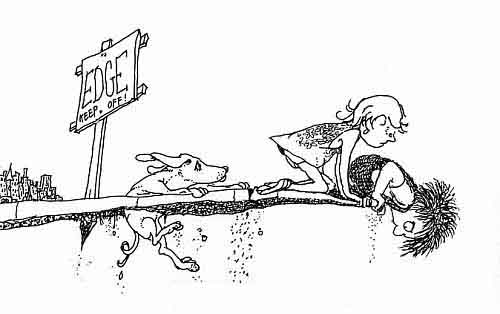
Unfortunately, we don't have any photos -- it wasn't exactly the best time for that -- but we do have this artistic rendering, courtesy of Vincent Pan Gogh:


JP:
Incredibly, the Hilux is now an ambulance. Still on the dirt road and now with the back window down, all the dirt the Hilux is kicking up is now coming right back into the car, some sort of dirt vortex that's throwing dirt at the two of us so hard where we couldn't open our eyes nor talk as we could feel the dirt hit our teeth even with our mouths shut. We could feel the dirt accumulate on us and all around us.

After about an hour on the bumpy dirt road, we finally reach Rumphi and the hospital. At first we pulled up to a building that looked like the hospital but turned out to be a women's health clinic. We all got out of the car.

Ryan and I thought that we bore the brunt of the dirt shower, but to our surprise, we hop out of the car and discover that we weren't the only ones dirty. We definitely were the dirtiest (no pictures unfortunately but we were told it looked like we had a thick layer of make-up on) but with the windows down, dirt covered the entirety of the car, inside and out.

RS: The hospital we needed to go to was at the end of the road we were on. We decided that Dan would drive the injured to the hospital and Katy, Mellissa, Jon, and I would follow behind by foot.

I can only imagine how ridiculous we must have looked walking down that street. Not only must it have looked funny for a group of four muzungus to be walking down a road that had nothing for tourists to see, we were completely bathed in dirt.

JP: But hey, what's a little dirt, plus, we did a good deed, karma should be back on our side. Right? RIGHT? RIGHT!!!??? ...

No One Home at Mr. Mhongo's

So off we go from Chelinda camp. It's an hour later than we hoped, but at least we have a double patched tire that, although the mechanics warned us not to drive out on, should serve as a fairly reliable spare.

I, for one, was bummed to leave. The park was beautiful, the weather was perfect, and Chalet 4 was cozy. I was also excited about Nkhata Bay, however; I had read a bit about it and the Cheeze and Squeezy had talked it up.

JP: From one of our earlier posts, you may remember us describing the road conditions up to Nyika Plateau, namely that they are terrible. So terrible that we could go no faster than 20km/hr, tops. So terrible that Dan would send us out to remove large impediments, oh, you think I'm kidding ...
he'd then take off down the road, make us run to catch up and have a laugh.


RS: Unfortunately, we had to take the same road down that we took up. Fortunately, it's still fun to laugh at Jon.

JP: So after a couple days of these roads, rocking back and forth, side to side and me hitting my head numerous times on the side of the car [RS: Jon is the only one who seemed to have this problem, and he experienced this problem again, and again, and again, and . . . did you ever see that movie Memento?], we were really looking forward to making it back to the tarmac road, especially since we were down a spare. [RS: Or at least a spare we could trust - did we mention this we're driving with the wrong sized tire on the front driver's side?] We were determined to make it to Nkhata Bay for swimming in Lake Malawi and this dinner buffet the Squeeze kept telling us about, but before Nkhata Bay, we still had to do a few things:
  1. Drop by Mr. Mhongo's to give the run-down on the borrowed tire drop-off
  2. Buy a new tire in Mzuzu
  3. Return the borrowed tire to the Nyika office there
  4. Buy more diesel
  5. Use the internet
Seemed pretty manageable.

RS: We made it to the gate of Nyika without incident. Squeezy, behind the wheel, got us through like a Baja 500 driver on methamphetamines.

(Come to think of it, a helmet would have been good for Jon.)

We went down to Mr. Mhongo's place to tell him about the borrowed tire. We talked to his wife who told us Mr. Mhongo was in the area but she didn't know when he'd be back. Well, we were facing a bit of a time crunch. The Squeeze had already written Mr. Mhongo a note that Prince Daniel was to pass along, so we figured we made a good faith effort and we'd just keep moving to Mzuzu.

We got back on the road, exited Nyika, put some music on the radio, and kept driving.

http://www.sdsefi.com/truck1.jpg

22 May 2007

Race Against the Clock

Beyond Rumphi there is not much going on. We pass a number of scattered villages but even these become more and more sparse as we continue on towards Nyika. The road is dirt and it's pockmarked with craters worn through by the downpour of the rainy season that recently ended. Its ragged condition makes our travel slow and jarring.

Neither the isolation of the area nor the poor condition of the road bodes particularly well for our goal of reaching the gate to Nyika by 3:00 p.m.; we need gas and we have fewer than thirty minutes to traverse the slow-going 50 km or so in front of us.

The deeper we plunge into the Malawian countryside, the more skeptical we all become of finding the filling station the police officer and gas station attendant in Rumphi described. Dan has been on this road before and he doesn't remember a gas station. Besides, how could there be a gas station in an area so far-flung from a major town?

Despite our doubts, we spot a filling station in an unlikely location about 20 minutes outside Rumphi. It's a single pump cropping out of a grassy yard next to what apears to be someone's home. We pull onto the grass and into the bay but see no obvious way of dispensing the fuel from the hose or paying for the gas. Dan gets out to ask but no one is inside either the house or small general store across the road. Moreover, after inspecting the pump more closely, we realize that this isn't a station for diesel at all; this thing pumps paraffin oil (aka kerosene). We could cook or heat our house with it, but not power our car. (I've since heard that you may actually be able to use paraffin in a diesel tank, but I'm not sure.)

Now if we turn around it's a guarantee that we'll forgo one or our two prepaid nights in Nyika. We've got about a quarter of a tank left; it's tight but we think we might just have enough to make it to the Chelinda camp. That won't leave us any gas for driving around the park or getting back out, but we've read that there is some diesel to be found at the camp even though our guide book cautions not to rely on the short supplies available there.

At this point, though, we've about run out of options. We press on and cross our fingers both to make it to the gate on time and for our gas to last us to Chelinda.


After another 15 minutes of driving we realize that there is no chance we'll make it by 3:00 p.m. The road is just in too bad of shape.

We thumb through the guide book again looking for any indication that they will turn us away if we arrive after 3:00 p.m. We find nothing. Moreover, Dan thinks the VSO volunteer who told us about the 3:00 p.m. deadline is a bit of an alarmist and may be exaggerating. We figure we might as well try our luck. If they turn us away we'll have to backtrack to Rumphi, but we've got nothing else to do today if we don't make it to camp, so we've really got nothing to lose.

Well, the road is a lot longer than any of us thought. This park is remote. We occasionally pass by a village but, at this distance from Rumphi, even the small villages are few and far between. The good news is that the scenery is stunning and after resigning ourselves to the idea that we'd be late, I think we all relaxed enough to enjoy it.

After another hour and twenty minutes or so, at about 4:05 p.m., we finally reached the main gate to Nyika.


The gate is closed and we're nervous. A sign does in fact say that you must enter the park by a certain time of day, but the cutoff is 3:30 p.m., not 3:00 p.m. like the VSO guy told us in Lilongwe. I'm feeling more confident about our chances of getting in only a half hour or so after the deadline except for the fact that the woman at the gate appears to be closing up shop.

Dan walks up to work his abundant charm.


He goes inside the booth with the guard, which we interpret as a very good sign. A couple minutes later he comes out to the car to get more money for the entrance fee.

Sweet! We've made it.

Dan signs us in on the log sheet and noticed that, curiously, we're the only people to have entered the park today. This place really is out in the cut.

Rumphi, Malawi: Not the Land of Milk and Honey

About an hour after leaving Mzuzu, we reach the road to Rumphi. It's now about 2:30 p.m., which gives us a half hour to make it to the entrance of Nyika before being turned away. We think the gate is about 30-50 kilometers from town, so, even though the paved road ends in Rumphi, we figure we've got a fighting chance of coming in under the wire.

But first things first: we need gas.

We pulled off the north-south highway we'd been traveling since Lilongwe to take the road to Rumphi. After crossing a river, we drive determinedly to the only gas station in town. When we get there, we see that the attendants are meticulously squeezing the station's last drops of diesel into a generator. The only gas station in town has no gas for us.

Dan rolls down the window and the guys confirm that the situation is as it appears. Now, if we turn back to Mzuzu for gas we'll add two hours to our trip and most likely have to spend the night in Rumphi. From the looks of the town, this is not an attractive option. Plus, we've already paid for lodging in Nyika. Dan is pretty sure there's nothing beyond Rumphi but he asks anyway whether we'll find another gas station before Nyika. To our surprise, one of the attendants assures us that yes, about, fifteen minutes up the road, there's another station with diesel. We should try our luck there.

Dan is skeptical about the claim because he has driven past Rumphi before and saw nothing resembling a gas station, but we press on thinking that this guy must know better than us.

When we reach the edge of town where the paved road ends and the dirt road begins, we're stopped at a police checkpoint. Dan asks the officer about gas and the officer repeats what the attendant had said: about fifteen minutes up the road there's another gas station.

Good. We might just make it.

[Impending Doom Music Crescendo]